
Make Your Way
Resurrection and the Power That Works When We're Not Watching
28 After the Sabbath, at dawn on the first day of the week, Mary Magdalene and the other Mary went to look at the tomb.
2 There was a violent earthquake, for an angel of the Lord came down from heaven and, going to the tomb, rolled back the stone and sat on it. 3 His appearance was like lightning, and his clothes were white as snow. 4 The guards were so afraid of him that they shook and became like dead men.
5 The angel said to the women, “Do not be afraid, for I know that you are looking for Jesus, who was crucified. 6 He is not here; he has risen, just as he said. Come and see the place where he lay. 7 Then go quickly and tell his disciples: ‘He has risen from the dead and is going ahead of you into Galilee. There you will see him.’ Now I have told you.”
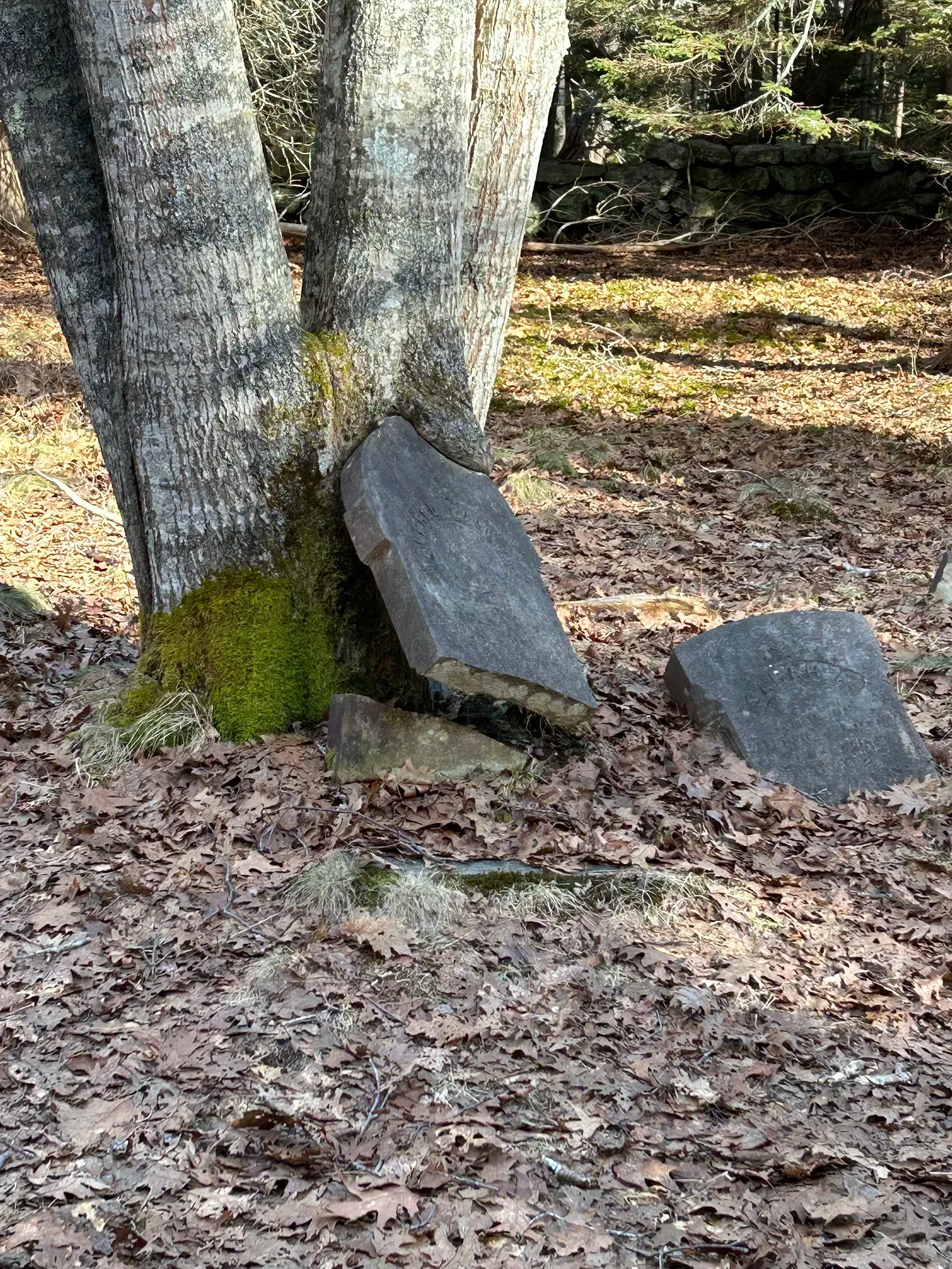
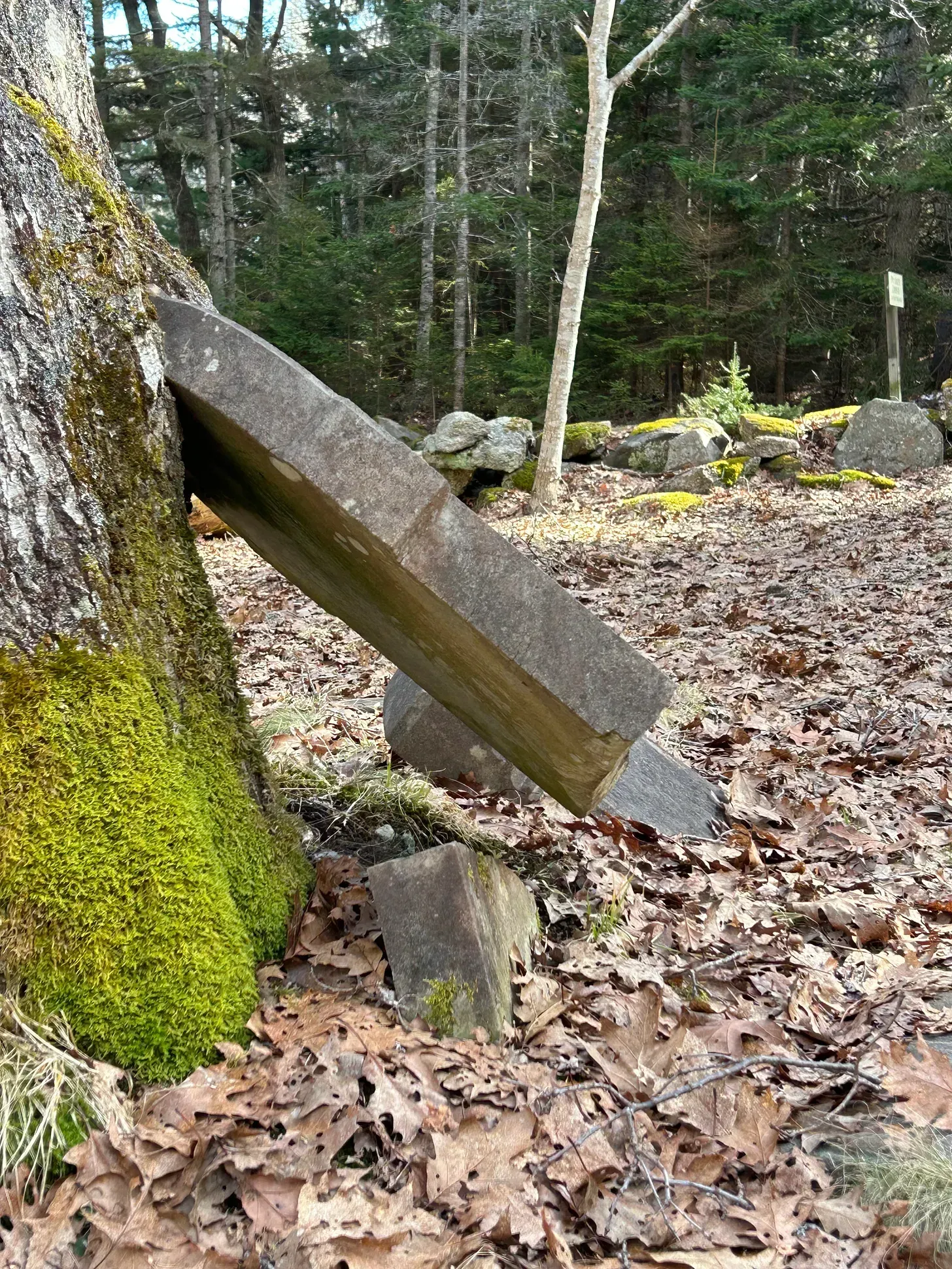
I’m taking long walks since my preaching series on the Camino de Compostela to find a sense of pilgrimage right here. Monday, I walked at the Porter Preserve Land Trust, anticipating the rocky coast vistas and lovely smells of salt and pine together, but the real surprise was a walk through a dilapidated cemetery near the entrance. A tree has grown close to one of the old gravestones, and over time grew up against the top and enfolded it. As the tree has grown, it put more pressure on the headstone. It has nudged it out of place millimeter by millimeter, week by week. A crack began to form many months ago, and at some moment, the pressure was great enough to snap the granite in two.
I wonder if there was a great cracking sound audible if you walked by at that exact moment, or did it just slowly happen in the mysterious growth of time and tree. Granite is shattered by a delicate process that goes unnoticed till much later. As I looked at the stone, these words came to mind-the power of death is broken. I don’t know exactly when or how, but the evidence is there if you look. The life of the tree has done its work, and it continues to grow, and the broken stone will rise as the trunk stretches upward.
We naturally desire clear and exact moments where we can point to the action of God. Then we can enshrine it, revisit it, touch it for assurance of certainty. When Peter observed the Transfiguration of Jesus conversing with Moses and Elijah, his first inclination is to build an alter to mark the event. Mark it for everyone to visit and know the truth. Instead, Jesus takes him back down the mountain. Truth isn’t attained and stored like a commodity. Instead, a glimpse of holiness sends down the road.
Growing up Evangelical, great emphasis was put on knowing the moment when you are saved. You were supposed to have an answer like, “I was born again on February 1st, 2015, when I was cured of cancer, or when Malcolm Butler intercepted that pass at the goal line with 26 seconds left, the Patriots won, and I knew Jesus loved me while I was yet a sinner.” If you know the exact moment you were saved, more power to you. For many of us it is more like the tree growing in the cemetery. It starts small and keeps going, through droughts, storms and sunshine, as it reaches for the sky. At some moment, we realize we are on a new journey.
The Camino to Santiago de Compostela began as a clear destination to a place of holiness. Tradition says the bones of James bar Zebedee, the fisherman disciple, are buried there. James was with Jesus at all the key moments, first called, all the way to Gethsemane and the inner room. Acts ____ says James was beheaded in Jerusalem, and his followers took the body to hide it in Spain. The bones were rediscovered in the 9th century and became a major pilgrimage sight. What is it that draws us to the bones? We want to physically touch holiness, have the sacred be something solid. Here are James’ bones so this must all be real. We take the time and expense to scientifically study the bones from the grave to determine if they are from the first century. As if we could prove God’s existence if we have the right DNA samples. Ironically, it would be quite disappointing to find Jesus’ bones.
But something very different happens for many Camino pilgrims. Despite all the rituals of touching the pillar of the Portico of Glory, embracing the Statue of the Apostle and breathing in the cloud of incense at mass, it can be anticlimactic. After getting your passport stamped to show you have completed the journey, now what? Many people describe the flight home disorienting as they transition from the quiet, steady pace of walking to the speed and noise of modern life. You may experience a transformation on the journey, but you are coming back into a world that has not changed.
Going home can be called the second Camino, the more challenging journey. One journey is done, but we are not more holy because we suffered the miles, touched history and been near the bones of a disciple. We come closer to God if we can walk in the same way back home. Can we continue to share the journey?
As we read the resurrection narrative in Matthew, the author offers tangible marks of completing one journey and starting another, much like going home after the Camino. All four gospels set the resurrection in the early twilight. As the sun is coming over the curve of the horizon, there are a few liminal moments of gorgeous transition from darkness to light. Yesterday when I woke, the woods and cove were bathed in pinkish, orange light. Three gulls flew over, calling out the beginning of the day, and their bellies reflected pink. There are only about two minutes a day where soft sunlight paints the world in pastels.
That is what we hope for at an Easter sunrise service, looking West over Boothbay Harbor, as we imagine ourselves with the women gathering at the tomb. But Matthew portrays Jesus’ re-entry to life with dramatic forces of nature. An earthquake strikes and an angel comes down like lightning and rolls away the stone. Earthquakes mark the appearance of God numerous times in the scriptures. When Moses receives the Ten Commandments at Sinai, or Elijah meets God in the cave of Horeb, or God finally answers Job, earthquakes are the forerunner.
I’ve only been through gentle rumbles that rattle a teacup, but people who have been through an earthquake say you hear it before you feel it. It’s like thunder coming up through the floor, underneath instead of above. Near the epicenter people describe the solid earth rippling like waves crashing on the beach. There is very little you can do as forces much greater than the strength of our arms and legs are in play. Matthew says the brave, battle hardened Roman guards are so frightened they fall like dead men. Empires like to think they give thumbs up or thumbs down on who shall live and die, but here the power of the sharpened sword will do them no good.
But the women are still standing there, frightened but still on their feet. It is the women who have watched Jesus crucified and die a slow death. It is women who are present as midwives to hear the cries of birth. Here they are at the liminal space between violent death and life reborn. They may be fearful, but they are still standing.
The angel begins with the words angels say dozens of times in the Bible, “Be not afraid.” If life doesn’t scare you, you probably aren’t paying attention. But don’t let fear control you. It’s the angels next words surprise me, “He is not here, he has been raised.” All this and they don’t get to see Jesus? No, the angel says he has gone out ahead of you to Galilee. Jesus isn’t hanging around to make an appearance, he is already heading down the road.
Just when we think we are finally beginning to understand, to think we have arrived at the end of our Camino, we hear that God has already moved past our arrival point. We try so hard to conserve what we know and experience of God. We try to store holiness in scriptures, rituals and theology. We long to feel like we have arrived, our passport is stamped at journeys end. But God is already ahead of us, pointing to a new journey. Jesus is not parking in the Temple to uphold and renew the existing structure, but headed back to Galilee. The angel tells the women, you won’t meet Jesus at the tomb, but back on the road.
Too often in life I have spent days waiting for a sign. Waiting for things to feel right. Waiting for some internal alert to ding and say: This is the path. Kate Bowler wrote in her blog this week,
“Sometimes we just wait and wait, hoping God will say ‘Go.’ We’re looking for the nudge. The green light. The burning bush. But what if you just go… and wait for God to say ‘Stop’ instead?”
The tree in the cemetery did not wait to become a burning bush, it just grew and trusted in the light. So maybe resurrection is less like a moment we can point to—and more like that tree.
In the background but persistent. Working its way through what once seemed immovable. The stone did not shatter all at once. But it did break. And the life within the tree keeps rising.
That is the energy of Easter. Not something we prove. Not something we contain. But something already at work—already ahead of us—calling us forward.
So lace up your boots. The tomb is empty. And Christ is already on the road.