
The Loving Way
What Jesus knew about feet and souls
So Jesus got up from the meal, took off his outer clothing, and wrapped a towel around his waist. 5 After that, he poured water into a basin and began to wash his disciples’ feet, drying them with the towel that was wrapped around him.
6 He came to Simon Peter, who said to him, “Lord, are you going to wash my feet?”
7 Jesus replied, “You do not realize now what I am doing, but later you will understand.”
8 “No,” said Peter, “you shall never wash my feet.”
Jesus answered, “Unless I wash you, you have no part with me.”
9 “Then, Lord,” Simon Peter replied, “not just my feet but my hands and my head as well!”
Who would you let wash your feet? Feet are one of the most psychologically loaded parts of the body. Feet take a beating and are more likely to be deformed than other parts of the body. Toes can be weird. We get callouses, bunions, fungus under the nails. Women fear their feet are too big, men fear their feet are too small. Your foot has 600 sweat glands per square inch, ten times more than other parts of the body. Plus, it is hard to care for your own feet, since it is nearly impossible to see the bottoms, unless you are an experienced contortionist. No wonder people often apologize for their feet before a pedicure, much the way people apologize to a dentist for not flossing.
Whose feet would you wash? Unless you are a nurse, cosmetologist, or podiatrist, you likely have never washed anyone’s feet, at least not since your honeymoon.
Why has John’s Gospel made this foot washing scene so prominent to the Holy Thursday story? In the first three Gospels of Matthew, Mark, Luke; they are clear that J
esus’ central act and ritual of this night is to break bread and share the cup. This is my body broken for you, this is my blood poured out for you. The words of institution we say over communion to this day were first written by Paul to the Corinthians near 55 CE. So why does John come along a generation later when communion is a common Christian practice, and put the towel and basin more central to the evening? John acknowledges they are gathered for the Passover meal but says nothing else about it. Instead, Jesus rises during the meal and begins to wash the disciples’ feet.
At first the disciples accept this in silence. We don’t know who goes first. Was it James and John, the brothers who wanted to be at the left hand and right hand of Jesus? Were Matthew the tax collectors’ feet softer than the fishermen? How did Judas feel as Jesus scrubbed between his toes? Feet are ticklish, with over 8000 nerve endings, the most sensitive part of the body. Did Barthalomew giggle as Jesus took his foot?
Did Jesus wash Mary Magdalene’s feet? Women who have never permitted themselves to be tended — caregivers, mothers, people who give and give — sometimes find themselves unexpectedly tearful during a foot massage or pedicure. The simple experience of someone attending carefully to them, without asking anything in return, breaks something open.
Then Jesus comes to Peter, who has been silently stewing as the other disciples sit there like sheep, while their Rabbi humiliates himself. Peter asks, “Lord, are you going to wash my feet?” It seems like a silly question since Jesus is clearly going around washing everyone’s feet. I hear Peter saying it like Robert DeNiro in Taxi Driver, “You talking to me? You gonna wash my feet?” When Jesus says Peter will understand it later, Peter objects, “You will never wash my feet.” Never. Peter has put his foot in his mouth so many times, so the whole scene is leaving a bad taste.
I doubt Peter’s reluctance is simply about his hammer toe or foot odor. Perhaps he feels some embarrassment or shame about anyone touching his feet. But the man Peter calls Lord is not someone who washes feet. You are not going to save the world or bring the new kingdom while down on your knees.
Maybe Peter’s reaction explains why we downplay this act of Jesus. We can’t have Jesus act like this, if we are supposed to imitate him. Did John put the towel and basin central because he wanted to counter our tendency to hubris, to remind us to be servants? We lift up a powerful Christ, who then blesses our power. How would Christianity be different if we washed each others’ feet instead of eating squares of bread together?
It would certainly challenge our cultural and religious superiority. We would not pray in times of war to crush our enemies, to show them no mercy, to celebrate victory in the name of Christ.
Listen how Jesus gently nudges Peter past his opposition. “Unless I wash you, you have no share with me.” The word for “share” (meros) means participation, portion, belonging. To refuse the washing is to refuse the terms of the relationship. Peter swings wildly to the opposite, asking Jesus to wash his whole body. Jesus steadies him, saying just his feet are enough. The feet, the often weird, malformed, battered, part of us that carries the whole load of the body, is enough.
Let’s see the act from Jesus perspective as he kneels before everyone. I don’t think he just poured water over the feet, dried them, and moved on. I imagine him pausing, holding each foot gently. These are the feet that have followed him, traveled with him. This act is an intimate blessing, touching all the sensitive nerves. Before he dies, he wants them to feel his touch on their feet. It is easy to say, “Love one another as I have loved you.” But as Maya Angelou once said, “We don’t remember peoples’ words as much as how they made us feel.”
When Jesus kneels before us tonight, He is doing something like a podiatrist does, checking for neuropathy — the gradual loss of sensation that comes when nerves are damaged. The doctor touches your feet in different places and says, “Can you feel this? How about on your heel? Can you feel over here?” It is dangerous to lose feeling not because it hurts, but because it doesn’t. You stop feeling the wound. You stop feeling the ground. You walk on injuries you don’t know you have.
A world of chronic pain and ceaseless bad news can do to the soul what diabetes does to the feet — it numbs us gradually, until we stop feeling what we walk through. We have watched cities bombed into rubble. We have watched children pulled from the wreckage. We have watched the most vulnerable among us lose what little protection they had, while those with power look away. And somewhere along the way, without noticing, we stopped being shocked. The news became weather. The suffering became background. We are walking on wounds we can no longer feel.
Can you feel this? he asks, kneeling before us. Can you still feel the person next to you? Can you feel what this night costs? Can you feel what love asks of you?
Then he dries our feet, stands, and gives us the only commandment he ever called new: Love one another as I have loved you. By this everyone will know that you are my disciples — not by your doctrine, not by your power, not by your certainty. By this. By whether you will let love get that close.
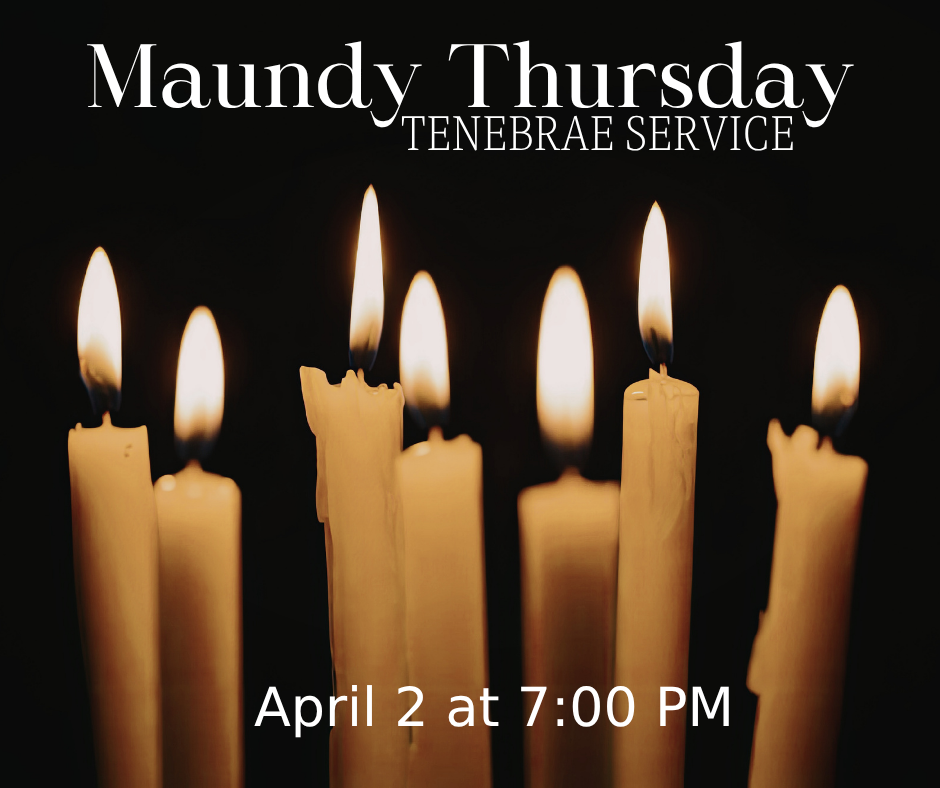
Tonight the candles will go out one by one. We will walk together into the darkness that comes before Easter. It will be uncomfortable. It is supposed to be.
But before we go there, he has knelt before us. He has held what is worn and strange and hidden about us, and he has not turned away. He has touched the most sensitive nerves and asked: Can you still feel this? If you can — walk with me.